Presents
Debate: Can We Convince North Korea to Denuclearize when East Asia is in an Arms Race?

Featuring:
Ms. Kelsey Davenport, Director for Nonproliferation Policy, Arms Control Association (ACA)
Dr. Yong-soo HWANG, President, Korea Institute of Nuclear Non-proliferation and Control (KINAC)
Dr. Bee Yun JO, Associate Research Fellow, Center for Security and Strategy (Defense Strategy Division), Korea Institute for Defense Analyses (KIDA)
Dr. Adam Mount,Senior Fellow & Director, Defense Posture Project, Federation of American Scientists (FAS)
Moderated by:
Dr. Jim Walsh, Senior Research Associate, Security Studies Program (SSP), Massachusetts Institute of Technology (MIT)
Register here: https://us02web.zoom.us/webinar/register/WN_xi04PyVXQ_66OL-SSTwohg
Over the last year, the Asia region has seen an alarming and intensifying arms race as countries react to China’s growing military threat. Analysts warn that this creates flashpoints across the region that could raise the risk of conflict and even nuclear conflict--a classic security dilemma. China’s testing of new ballistic missile systems, expansion of warships, and build-up of nuclear capable missile silos has prompted countries across the Asia Pacific including Taiwan, Australia, Japan and South Korea to modernize their military forces, deploy new missile technologies, and, in the latter case, even contemplate acquisition of nuclear weapons. North Korea is watching these developments carefully and has continued to develop and expand its own military arsenal, testing a new hypersonic glide missile earlier this year. Against this background, is it possible to still negotiate denuclearization with North Korea?
Please join the National Committee on North Korea and the East Asia Foundation for a special debate featuring American and South Korean experts Kelsey Davenport, Adam Mount, Yongsoo Hwang, and Bee Yun Jo, who will discuss these issues and respond to the central question of “Can we convince North Korea to denuclearize when East Asia is in an arms race?” Jim Walsh will moderate the debate.
This debate is an intellectual exercise and the arguments do not necessarily reflect the actual positions of the panelists or the organizations represented.
Register here: https://us02web.zoom.us/webinar/register/WN_xi04PyVXQ_66OL-SSTwohg
About the Speakers
 Kelsey Davenport is the Director for Nonproliferation Policy at the Arms Control Association, where she focuses on the nuclear and missile programs in Iran, North Korea, India, and Pakistan and on international efforts to prevent proliferation and nuclear terrorism. She also reports on developments in these areas for Arms Control Today and runs the Arms Control Association’s project assessing the effectiveness of multilateral voluntary initiatives that contribute to nonproliferation efforts. She is the lead author of the P4+1 and Iran Nuclear Deal Alert newsletter, which assesses developments related to the 2015 nuclear agreement with Iran, and the North Korea Denuclearization Digest, which tracks efforts to negotiate with North Korea over its nuclear weapons program. Kelsey is also the co-author of a series of seven reports assessing the impact of the Nuclear Security Summits on efforts to prevent nuclear terrorism. Kelsey joined the Arms Control Association in August 2011 as a Herbert Scoville Jr. Peace Fellow. Kelsey has been quoted in numerous publications, including the Washington Post, The New York Times, Foreign Policy, Newsweek, Reuters, Christian Science Monitor, Vox, and The Guardian and has provided commentary on NPR, CBC, CNN, ABC, MSNBC, Fox News, al-Jazeera, and C-Span. She has published opeds in various outlets, including TIME, Reuters, CNN, Bulletin of the Atomic Scientists, and Defense One. Kelsey is a term member of the Council on Foreign Relations and a member of the National Committee on North Korea. She was selected to the CSIS Mid-Career Cadre in 2018 and serves on the Board of Directors for the Herbert Scoville Jr. Peace Fellowship. Prior to joining the Arms Control Association, Kelsey worked a think tank in Jerusalem researching Middle East security issues. She holds a masters degree in peace studies from the Kroc Institute for International Peace Studies at the University of Notre Dame and a bachelor of arts summa cum laude in international studies and political science from Butler University.
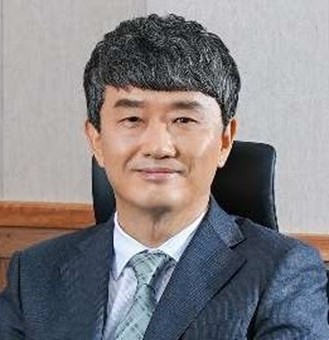 Yong-soo HWANG is a President of Korea Institute of Nuclear Nonproliferation and Control (KINAC). He served as a Director-General of the Center for Strategic Policy & Research at KINAC from 2014 to 2016. He served as a Senior Vice President, Lab Director, and Head in Korea Atomic Energy Research Institute (KAERI) in the field of nuclear waste disposal and safety, nuclear fuel cycle policy, U.S.-ROK cooperation for the East Asia nuclear non-proliferation, analysis and implementation of the U.S. 123 Agreement, Public and Stakeholder Engagement (PSE) for the ROK’s spent fuel storage, etc. He received his B.S. in the field of Nuclear Engineering from Seoul National University. He got his M.S. and Ph.D. in the field of Nuclear Chemical Engineering from the University of California, Berkeley. He served as a Member of the Advisory Group for the Multilateral Nuclear Agreement for the IAEA's Director-General from 2004 to 2005. He also worked as an Advisory Member of the Nuclear Safety and Security Commission, the ROK's national regulatory body for nuclear safety and security, from 2013 to 2014. He also worked as a visiting fellow at the Center for Strategy and International Studies (CSIS) at Washington D.C. from 2010 to 2012. He participated in a Special Issue Committee and an Educational Funding Committee of the Korea Nuclear Society (KNS). He was a board member for the Korean Radioactive Waste Management Society (KRS) and actively engaged in various related academic societies.
 Bee Yun JO is Associate Research Fellow at Korea Institute for Defense Analyses (KIDA). Before joining KIDA, she was Research Professor at Seoul National University, Institute of International Affairs (IIA). She also taught at Yonsei University East Asia International College(EIC) as lecturer. Major research interests are IR, Extended Deterrence, Nuclear-Conventional Deterrence, and ROK-US Alliance. Her recent publications (in Korean) include "Plan B for Non-Nuclear States in East Asia: Debating on Nuclear Latency as Means for Potential Deterrence"(National Strategy, 2021), US's Low-yield Nuclear Weapons and Extended Deterrence on the Korean Peninsula(KIDA, 2021). Her publications also appear in International Relations of the Asian-Pacific, Asian Perspective, and others. She received Bachelor of Fine Arts at Rhode Island School of Design(RISD) in 2009. She received M.A.(2013) and Ph.D.(2020) in International Studies at the Graduate School of International Studies, Seoul National University.
 Adam Mount, Ph.D. is a Senior Fellow and Director of the Defense Posture Project at the Federation of American Scientists, where his work covers U.S. nuclear strategy and force structure, conventional deterrence, and progressive foreign policy. Previously, he was a Senior Fellow at the Center for American Progress and a Stanton Nuclear Security Fellow at the Council on Foreign Relations.In 2015-16, he directed the CFR Independent Task Force on U.S. Policy Toward North Korea, a group of seventeen experts chaired by Adm. Mike Mullen and Sen. Sam Nunn. He now directs, with Andrea Berger, the FAS International Study Group on North Korea Policy, a group of twelve emerging experts from allied countries working to develop a sustainable strategy to manage a nuclear-armed North Korea.Dr. Mount’s other writing has been published by Foreign Affairs, The Atlantic, Survival, Democracy, and other outlets. He is a contributor to Axios Expert Voices. His analysis is regularly cited by The New York Times, The Washington Post, The Wall Street Journal, Politico, AFP, AP, and Reuters, and he has appeared on CNN, MSNBC, BBC, NPR, and CNBC. He has testified before the House Armed Services subcommittee on strategic forces. Dr. Mount teaches an annual graduate seminar in nuclear strategy at the George Washington University and previously taught international ethics at Georgetown University. He holds a Ph.D. and M.A. from the Department of Government at Georgetown and a B.A. from Reed College.
 Jim Walsh is a Senior Research Associate at the Massachusetts Institute of Technology’s Security Studies Program (SSP). Walsh’s research and writings focus on international security, and in particular, topics involving nuclear weapons, the Middle East, and East Asia. Walsh has testified before the United States Senate and House of Representatives on issues of nuclear terrorism, Iran, and North Korea. He is one of a handful of Americans to travel to both Iran and North Korea for talks with officials about nuclear issues. His recent writings include,"The Implications of the JCPOA for Future Verification Arrangements (including the DPRK)," "The Digital Communications Revolution: Lessons for the Nuclear Policy Community," and “Laser Enrichment and Proliferation: Assessing Future Risks.” In 2021, Dr. Walsh and his team received a major grant from the Carnegie Corporation of New York for a project examining communication about nuclear weapons and international security on social media. He is the international security contributor to the NPR program “Here and Now,” and his comments and analysis have appeared in the New York Times, the New York Review of Books, Washington Post, Wall Street Journal, ABC, CBS, NBC, Fox, and numerous other national and international media outlets. Before coming to MIT, Walsh was Executive Director of the Managing the Atom project at Harvard University’s John F. Kennedy School of Government and a visiting scholar at the Center for Global Security Research at Lawrence Livermore National Laboratory. He has taught at both Harvard University and MIT. Dr. Walsh received his PhD from the Massachusetts Institute of Technology.
