
Introductory Remarks:
Keith Luse, Executive Director, National Committee on North Korea
Featuring:
David Kenny, Assistant Professor of Law, Trinity College Dublin Law School, Ireland
Yonghoon Kim, Associate Professor, Sangmyung University Law School, South Korea
Justine Guichard, Assistant Professor of Korean Studies, Université de Paris, France
Moderated by:
David Williams, Professor of Law and Executive Director, Center for Constitutional Democracy, Indiana University Maurer Law School
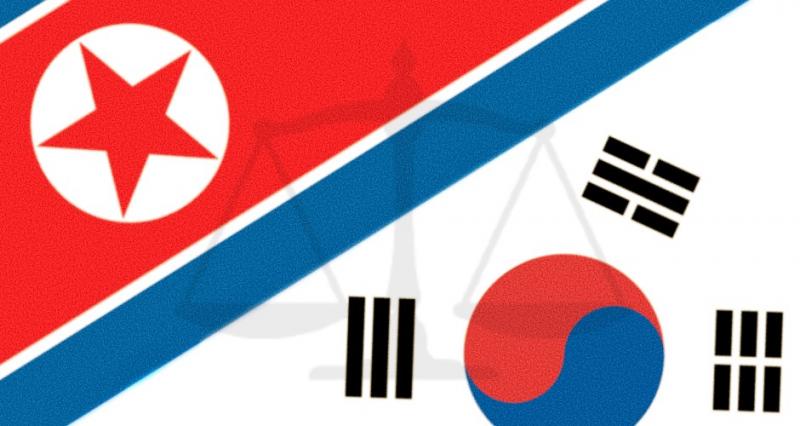
Limited scholarship exists that compares the constitutional structures of the two Koreas, or that traces how the legal systems of both North and South have evolved since the nation’s division in 1945. In February 2021, the National Committee on North Korea (NCNK) virtually convened a group of international experts to lay out a foundation for such scholarship and consider the commonalities and dis-commonalities between the constitutions of the Democratic People’s Republic of Korea and of the Republic of Korea. Thirteen scholars from seven countries with specialties in constitutional design, constitutional law, and Korean law participated in the conference, identifying areas of both similarity and difference between the two constitutions. It is clear that these two constitutional systems, based on some shared traditions and history, and some very different traditions and history, have convergent and divergent aspects. Exploring these similarities and differences in both text and practice is necessary for understanding the constitutional and political dynamics of each country and of the Korean peninsula as a whole.
Please join NCNK for a public webinar reviewing the findings of the February workshop, which NCNK has summarized in a recent workshop report. Three participants of the conference, Justine Guichard, David Kenny, and Yonghoon Kim, will discuss the report findings and general reflections on comparing the two constitutions.
Speakers
Dr. Justine Guichard is currently an Assistant Professor of Korean Studies, Université de Paris. Holding a PhD in Political Science from Columbia University and Sciences Po, Dr. Guichard specializes in the study of contemporary Korean law, politics, and society. Her first monograph, Regime Transition and the Judicial Politics of Enmity: Democratic Inclusion and Exclusion in South Korean Constitutional Justice, was published by Palgrave Macmillan in 2016. She is currently working on her second book project provisionally titled The In Ho Oh Case: Crime, Migration, and Race in Cold War America and Korea.
Dr. David Kenny is an Assistant Professor of Law in the Law School, teaching Irish and comparative constitutional law, conflict of laws, critical legal theory and law and literature. He is a graduate of Trinity College Dublin, Harvard Law School, and the Honourable Society of the King's Inns, and is an alumnus of the US State Department's Fulbright programme. Dr Kenny's research specialises in Irish and comparative constitutional law. He is co-author of the recent 5th edition of Kelly: the Irish Constitution, the leading text on Irish Constitutional Law, as well as many peer-reviewed articles in leading national and international journals on topics such as proportionality, constitutional silence, referendums, and executive branch legal advisors. His current research projects focus on critical accounts of comparative constitutional law methodology, constitutional culture, and referendums, as well as on constitutional implications of Brexit for Ireland. He also writes in the field of law and literature.
Professor Kim Yonghoon currently serves as an Associate Professor at the Sangmyung University of Law School, Seoul, Korea. He is presently a visiting researcher at the Unification Law Center, Law Research Institute at Seoul National University and is also the current Public Relations Secretary of the European Constitutional Society. He obtained a Bachelor of Law from the School of Law at Seoul National University and obtained a Master of Law and Doctor of Law from Seoul National University. He has served as an Editorial Assistant for the Public Administration Department at Seoul National University, as a Senior Researcher at the Law Research Institute at Seoul National University, as an Associate Research Fellow at the Korea Legislative Research Institute, and as an Audit Researcher for the Audit Research Institute. Prof. Kim Yonghoon’s research focuses on South Korean Constitutional Law with comparisons to the European Union. He has also researched North Korean Laws.
Professor David C. Williams is a Professor of Law and the Executive Director of the Center for Constitutional Democracy at Indiana University Maurer Law School, where he teaches constitutional law and Native American law. A noted constitutional law scholar, Williams has written widely on constitutional design, Native American law, the constitutional treatment of difference, and the relationship between constitutionalism and political violence. He is the author of The Mythic Meanings of the Second Amendment: Taming Political Violence in a Constitutional Republic (Yale University Press, 2003). He is also co-editor and primary author of Designing Federalism in Burma (UNLD Press 2005), which is widely read in the Burma democracy movement. As Executive Director of the Center for Constitutional Democracy, Williams consults with a number of reform movements abroad. He advises many elements of the Burma democracy movement on the constitutional future of that country. He is a consultant to the government of Liberia on its constitutional revision process and has helped to write Liberia's law reform and anti-corruption statutes. He is also the primary author of the first treatise on the meaning of the Liberian constitution (forthcoming). More recently, he has become a constitutional advisor to the Democratic Party of Vietnam to help the party find ways to work with the government of Vietnam for peaceful reform. Williams graduated magna cum laude from Harvard University, where he served on the Board of Editors for the Harvard Law Review.