
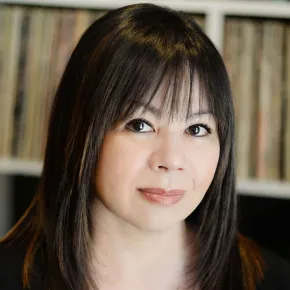
Suzanne DiMaggio is a Senior Fellow at the Carnegie Endowment for International Peace, where she focuses on U.S. foreign policy toward the Middle East and Asia. She is a leading practitioner of diplomatic dialogues with countries that have limited or no official relations with the United States. For over two decades, she has led Track 1.5 and Track 2 conversations to help policymakers identify pathways for progress on a range of issues, including regional security, nuclear nonproliferation, conflict prevention and resolution, crisis management, confidence building and negotiation, and bilateral relations. Her research and work draw on an approach to informal diplomacy she has been developing since the late 1990s, which began with a focus on U.S. relations with China, Russia, and Japan, and later expanded to Iran and the Middle East, Myanmar/Burma, and North Korea.
She directs Carnegie’s U.S.-Iran Initiative, which explores possible grounds for constructive diplomatic engagement and the development of mutually acceptable strategies for managing a range of contentious issues. The Initiative’s centerpiece is a long-running dialogue that she launched in 2002, which is often cited as a model for how to conduct informal diplomacy effectively and creatively. These efforts helped to establish a foundational basis for the secret talks between Iran and the Obama administration that led to the 2015 landmark comprehensive nuclear agreement. They also contributed to a de-escalation in tensions following the killing by the U.S. of Iranian General Qassem Soleimani and Iranian retaliatory strikes on Al Asad Airbase in Iraq in January 2020 and helped to avoid an escalatory spiral in the lead up to and during the April 2024 Israel-Iran confrontation.
She also directs Carnegie’s U.S.-China Initiative, which aims to shed light on how great power rivalry could alter the global order while exploring the potential for developing a positive cooperation agenda focused on stabilizing bilateral relations and reducing the risk of conflict. The project includes an informal diplomacy component focused on U.S.-China relations in the context of several regional flashpoints, including Iran and the Middle East, the Russia-Ukraine War, and North Korea.
Her work on North Korea included an unofficial Track 1.5 dialogue process that transitioned to the first official diplomatic discussions between the Trump administration and North Korean government in 2017. In 2011, she facilitated early talks that brought together senior officials from Myanmar and the U.S. to exchange views on the re-establishment of relations following the transition of Myanmar’s government.
Before joining Carnegie, she was a Senior Fellow at New America, the Vice President of Global Policy Programs at the Asia Society, and the Vice President of Policy Studies at the United Nations Association of the USA. She serves on the Board of Directors of the Iran Project and the National Committee on North Korea, and as an Advisory Board member of Foreign Policy for America and the Vienna-based Pax Sapiens/Open Nuclear Network. She also is an Associate Senior Fellow at the Stockholm International Peace Research Institute (SIPRI) and a co-founder of the Quincy Institute for Responsible Statecraft, where she served as the inaugural Board Chair. She holds a BA from New York University and an MA from City College of New York (CUNY).