
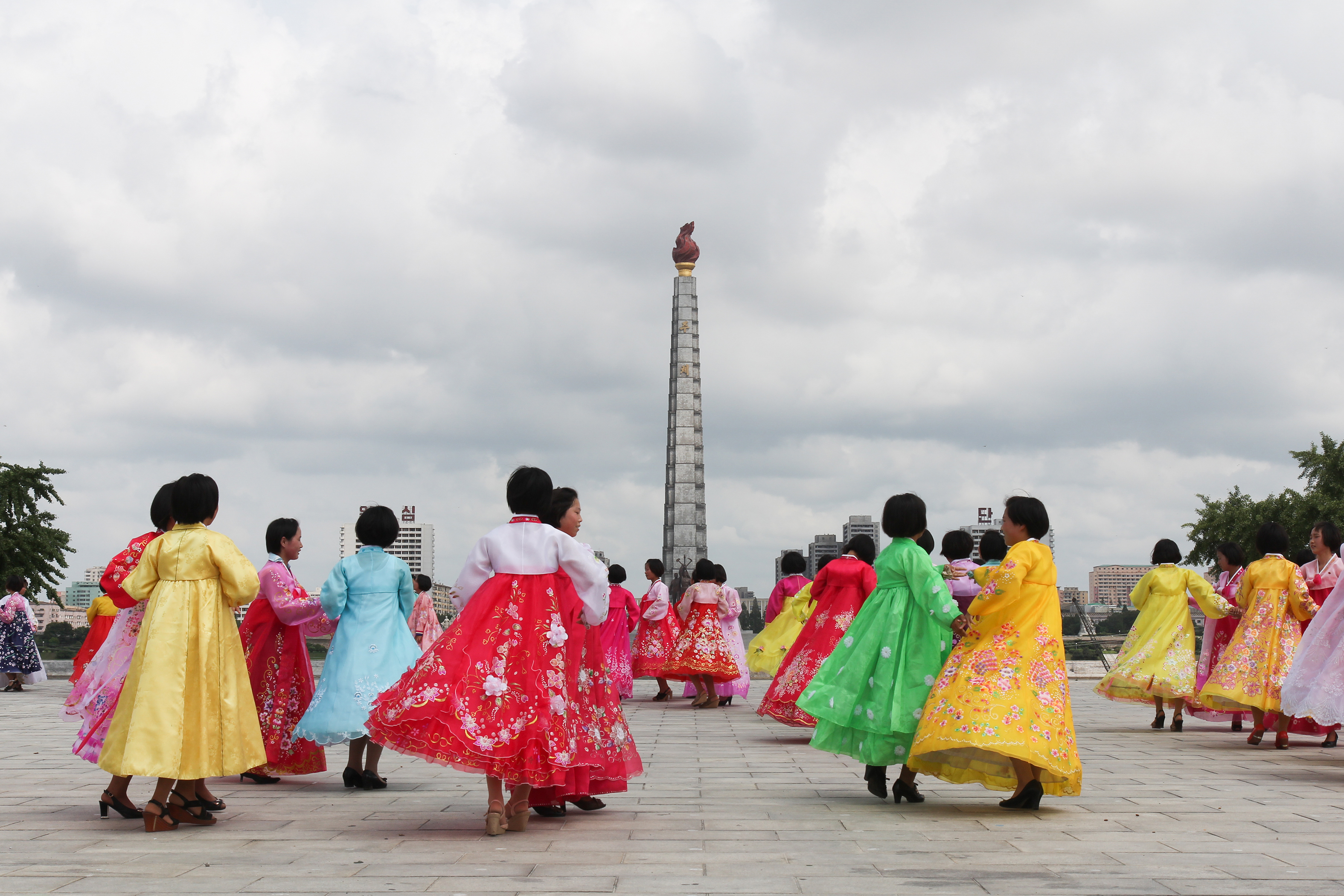
Primary Author: Dr. Gianluca Spezza
Secondary Author: Mandana Saman Abdullah
January 2025
All views presented are the authors' own.
Introduction
This paper proposes a critical examination of the gaps between North Korea (DPRK)'s professed adherence to United Nations (UN) policies and international treaties concerning women's welfare, socioeconomic rights, opportunities, protection from violence, and the practical implementation of these commitments. We begin by drawing a comparison of the repercussions for crimes of rape, violence and abuse in China, South Korea and the United States, in order to accentuate the contradictions between the North Korean government's official discourse on women's rights and the harsh realities experienced by women in the country. The second part of the article moves beyond the immediate threat of violence, exploring domestic challenges that North Korean women face in education, healthcare, and economic opportunities1. Finally, we underscore the limitations of international condemnations, sanctions, and the ineffectiveness of the UN system in addressing the issue of violence as well as socioeconomic disparities. In doing so, this research seeks to contribute to the broader discourse on state compliance with international norms, the overall field of Korean studies, the literature on socioeconomic development in North Korea, and women's rights.
Background
North Korea (Democratic People’s Republic of Korea or DPRK) is a signatory to international treaties and an active participant in UN development programs that stress the importance of women's rights and welfare. Its official discourses - and portions of its legislation - celebrate the socioeconomic achievements of women. Despite the increasing commitment of the DPRK to UN programs for gender equality and women’s rights, the actual living conditions of women in North Korea have worsened over the last three decades - a decline documented in international reports as well as in the academic literature on North Korea2.
The DPRK official narratives have - not without reason - long boasted about the significant strides taken for and by women within both institutions and civil society, under the banner of their socialist revolution. Part of the North Korean studies community - focusing on macro indicators such as education, healthcare, and the laws governing labor, social services, divorce and abortion - found itself in agreement until recently. Particularly during the DPRK's 1970s heyday, these indicators painted a picture of women faring considerably better than their counterparts in neighboring countries, including South Korea; however, contemporary analyses point at cracks in this seemingly positive portrayal3.
As in most other countries, women in North Korea often live longer than men; they also appear to shoulder much harsher burdens throughout their lives. North Korean women work longer hours, suffer disproportionately from illness and abuse, and endure the perils of illegal migration in greater numbers than men4. Their vulnerabilities - second only to those of children - have been amplified by the grassroot marketization of North Korea, where women take a leading role but also suffer overwhelmingly from human trafficking, exploitation and sexual abuse – risks unheard of when the North Korean system offered a viable socioeconomic system through a “security trade-off” whereby citizens relinquished individual freedoms in exchange for state provision of basic goods, services, and safety5.
The seemingly persistent decline of women’s rights in recent decades reflects two major issues: North Korean laws do not offer women sufficient protection from violence in either domestic or international settings, while multiple obstacles continue to restrict women’s educational and economic opportunities. Furthermore, the current situation of women is in contradiction with the DPRK's approach to women's rights within the existing frameworks for the country’s cooperation with the UN. All of this is, of course, not a uniquely North Korean issue - shortcomings in protecting women from violence are common in several countries, and full gender equality is far from being a common achievement worldwide – but the situation of women raises critical questions about the effectiveness of international norms and the politics of justice in North Korea: why did violence against women (including, but not limited to, rape and spousal abuse) and the persistent barriers to their socioeconomic advancement grow in proportion to – rather than diminish with - the expansion of North Korea’s international commitments for women’s rights and gender equality?
The point of this study is not simply to point out that women, more so than men in the DPRK, struggle to secure safety and comfort because government policies have failed them repeatedly. What is less known is the web of contradictions entangling three elements: (i) what international treaties prescribe, (ii) what the UN frameworks for cooperation with the DPRK envision – particularly on the gendered aspects of their work in North Korea – and (iii) what women actually experience.
The UN and North Korea are currently in their fifth decade of cooperation and the DPRK participates actively in numerous gender-related initiatives led by the UN, manifesting pride in its own legislation on women’s rights. Simultaneously, several non-governmental organizations (NGOs) as well as UN agencies and bodies increasingly report on the violations and deprivations that women endure in the DPRK, with no apparent solution in sight. This conundrum warrants further scrutiny and to that end, this paper tackles three circumscribed yet critical questions. First: within the DPRK, and after decades of professed commitments, programmatic endeavors, and various UN activities concerning women's rights and gender equality, have these efforts demonstrably yielded any tangible progress in women's security and material well-being?; second: is the North Korean government living up to its legislative promises and political discourse on the protection from violence and the welfare of women?, and third: based on the United Nations and North Korea’s mutual commitments to women’s rights and the realization of gender equality in socioeconomic development, what conclusions can we draw about their actual implementation and the overall condition of women in the DPRK?”
The answers to these questions — as we seek to illustrate — highlight discrepancies in the normative approaches and statements of the UN regarding socioeconomic rights in the DPRK, and North Korea’s allegiance to the United Nations’ programs and treaties concerning the welfare, human rights and protection of women, the country’s official statements, and their actual implementations — or lack thereof. At present, the idea that UN-led gender-focused interventions have been successful thus far lacks immediate self-evidence and robust persuasion, and the DPRK, rather than being a “constant” violator of women’s rights seems to have fallen off what was once a more virtuous developmental path.
North Korean women: fundamental rights and opportunities for “an adequate standard of living.”
For a good part of its history, North Korea did not suffer the reputation of egregious human rights violator for which it is known today. On the contrary, measures such as the DPRK's legislation of 1948 granting divorce and abortion rights stand out as a bold move that predated similar legislation in some European countries by thirty-odd years. These measures look particularly progressive today, when viewed through current understandings of gender issues in development, or through the contemporary lens of the UN's framework on gender equality and reproductive rights. Long before it was fashionable to campaign for women’s participation in the labor market at all levels, the DPRK ran campaigns to incentivize female quotas in heavy industry jobs, the chemical sector, and agriculture. At the same time, North Korean publications have historically expressed unwavering support for women’s important role as the mothers of the nation, materializing over time through various legislative measures (such as those enacted in 1972 and 1976) and the creation of dedicated institutions: an extensive network of nurseries, kindergartens, and other childcare facilities demonstrably facilitated female participation in the workforce6. Moreover, the DPRK's engagement with the UN humanitarian agencies and the human rights regime – if selective and sporadic – has hinted over time at a nascent process of absorbing international norms7. For instance: through the reporting of the Committee on the Rights of the Child (CRC) and the Committee on the Elimination of Discrimination Against Women (CEDAW), the government has admitted – if partially – to instances of corporal punishment, episodes of domestic violence, the presence of street children, and the rehabilitation of teenagers caught smuggling pornographic materials, stating that preventive education is necessary to correct these crimes8. These problems are still downplayed, but no longer denied, as would be the case before the 1990s. Overall, the North Koreans report to some of the international treaties it signed and ratified, allow the government to readily underscore its own achievements, such as universal literacy and free healthcare for both men and women, while simultaneously distancing itself from countries that “tolerate prejudicial practices” such as forced marriages or female genital mutilation9. While this is true, three counter-arguments challenge the state narrative.
First, despite measures aimed at increasing female workforce participation, the state has not truly alleviated the burden of domestic duties shouldered by women. If anything, as underscored by the DPRK section of the UN Office for the Coordination of Humanitarian Affairs (UNOCHA) in 2003, the government has traditionally embraced societal norms that view women as the sole custodians of the domestic sphere. While the 1948 constitution of the DPRK brought with it a de jure commitment to lighten women's domestic burdens, this commitment manifested merely as a division of labor, relegating childcare, cleaning, and food preparation exclusively to the female domain. UNOCHA (2003) emphasizes that such duties, while not necessarily perceived as inferior, are deemed “different” and inherently feminine. The state's efforts to provide time-saving domestic appliances or nursing facilities intended to ease the burden, ultimately did not alter the fundamental equation. Women's roles as primary caregivers remained unchanged as the DPRK's traditional societal view is rooted in biological differences and distinct reproductive roles, hence the clear demarcation of domestic responsibilities, which are solely assigned to women10. Second, the DPRK's compliance with international human rights remains selective and inconsistent. Despite a substantial body of research exploring the complexities of interaction between “problematic” states and UN treaties, the specific case of North Korea and its selective engagement with the UN system remains under-investigated11.
Agreement | Status |
International Covenant on Civil and Political Rights | Acceded September 14, 1981; withdrew August 23, 1997, though treaty does not include a withdrawal provision |
International Covenant on Economic, Social and Cultural Rights | Acceded September 14, 1981 |
Convention on the non-applicability of statutory limitations to war crimes and crimes against humanity | Acceded November 8, 1984 |
Convention on the Prevention and Punishment of the Crime of Genocide | Acceded January 31, 1989 |
Convention on the Rights of the Child (CRC) | Signed August 23, 1990; ratified September 21, 1990; accepted amendment to Article 43 (2) February 23, 2000 |
Convention on the Elimination of All Forms of Discrimination against Women (CEDAW) | Acceded February 27, 2001 with reservations; partially withdrew reservations November 23, 2015 |
Convention on the Rights of Persons with Disabilities | Signed July 3, 2013; ratified December 6, 2016 |
Optional Protocol to the Convention on the Rights of the Child on the Sale of Children, Child Prostitution and Child Pornography | Signed September 9, 2014; ratified November 10, 2014 |
Marrakesh Treaty to Facilitate Access to Published Works for Persons Who Are Blind, Visually Impaired or Otherwise Print Disabled | Signed June 28, 2013; ratified February 19, 2016 |
Table 1. North Korea’s participation in international treaties on human, social, economic and political rights12.
Finally, for all their importance, cultural norms and adherence to international treaties remain outside of the domestic legal framework that should provide protection for women. The following section compares the repercussions for crimes of rape, violence and abuse in China, South Korea and the United States, pinpointing the contradictions between the North Korean government's official discourse on women's rights and the harsh realities experienced by women in the country as reported by both NGO and UN agencies who operate in the country.
How the DPRK punishes sexual offenders and violence against women: a comparison with South Korea, China, and the US
The North Korean government portrays itself as an advocate for women's rights, emphasizing high female labor force participation and contributions across diverse sectors. This official discourse, however, often deflects attention from the lived experiences of many North Korean women. Notably, the 2014 report by the UN Commission of Inquiry (COI), drawing upon extensive testimonies from defectors and human rights organizations, documented widespread instances of gender-based violence in North Korea, including domestic abuse, sexual assault, and human trafficking. While the official rhetoric champions women's rights, the legal and practical responses to these serious crimes within North Korea seem comparatively limited, highlighting a potential discrepancy between official pronouncements and concrete actions. This situation is further illuminated by contrasting North Korea's approach with that of its key international counterparts — South Korea, China, and the United States — where legal frameworks and enforcement mechanisms for addressing gender-based violence exhibit greater robustness.
The choice of comparing the DPRK to China, South Korea and the United States is grounded in their considerable influence on North Korea's current and future circumstances, coupled with their outspoken positions on human rights violations within the country. Seoul, Washington and Beijing all exert influence on the DPRK, albeit in different ways. South Korea is clearly the most direct benchmark for North Korea, though the possibility of a reunification or even a confederation is today further removed than in the past. China — its closest ally — often shields North Korea from international scrutiny and condemnation. The United States, a vocal critic of human rights violations in the DPRK, faces its own challenges in addressing domestic issues of gender-based violence and social inequalities, and is often criticized by North Korean and Chinese state media and social media accounts for practicing at home the very same violations it seeks to correct in countries like the DPRK or China. Examining how these countries handle the issue of gender-based violence offers valuable insights into the North Korean context.
Incarceration is the most prominent penalty for crimes of sexual assault and sexual harassment; in the US Federal Law, one of the major developments in sexual offense clauses is the codification of ‘any term of years’ in imposing imprisonment penalties13. Likewise, the Criminal Law of the People’s Republic of China punishes sexual offenses by a sentence of reaching up to 10 years or a ‘heavier punishment’14. In China, labor is a component of many of these incarcerations, with some articles categorizing imprisonment for sexual crimes as labor-intensive15. In China, the legislation occasionally goes as far as imposing the death penalty on sexual offenders16. Similarly, several U.S. state jurisdictions, such as California, have instituted preventive measures to stop the offender from committing the same crime again through chemical castration episodes17. Moreover, in order to protect residents and spread awareness, all U.S. states and territories have legislation mandating sexual offenders to register under SORNA (the Sex Offender Registration and Notification Act) for a set period of time regulated by law18. Lastly, in conjunction with these punishments and/or under mitigating conditions, penalties such as fines and deprivation of rights are periodically enforced. According to US Department of Justice reports, South Carolina's 1995 implementation of SORNA decreased first-time arrests for sex-related crimes by 11%19. Though it is difficult to draw similar findings for the People’s Republic of China, the country has seen a steady increase in sexual offenses, leading the Supreme People's Procuratorate (SPP) to declare a “zero tolerance” policy for offenses against minors20. However, this fact cannot be directly linked to the successful application of existing laws since, among other things, technology has aided in the concealment of the crime, and the traditional Chinese culture deters many victims from speaking out about the violence21.
In South Korea, the penalty for sexual offenses stated in its Criminal Act varies from fines to the death penalty22. Sexual offenders in South Korea are often sentenced to varying lengths of incarceration, which, in accordance with Article 42, can range from one month to 30 years or, in aggravating cases, up to 50 years, and according to Article 305-2 the sentence can be increased by one-half of the stated punishment23. Notably, as in the US and China, South Korean legislators have separated labor-intensive from non-labor-intensive imprisonment24. Moreover, sentences for sexual offenses could as well carry life imprisonment25. The Act has not refrained from imposing the death penalty on sexual crime perpetrators. Rapists who are directly or indirectly involved in the victim's death, or those who perpetrate these violent and indecent crimes against minors, may face execution26. Lastly, those who commit sexual offenses unequivocally face fines and loss of rights27. Outside of legal codes, however, there are substantiated indications that societal norms discriminate and shame women who suffer gender violence, which discourages them from reporting these crimes28. Filing sexual crime cases appears as a daunting task in South Korea, where courts seem to act leniently when it comes to sentencing sexual offenders29.
In contrast with the US, South Korea and China, and despite the emphasis on legal protections for women's rights enshrined in its own official discourses, the DPRK appears to have relatively mild penalties for crimes of sexual nature. There is no explicit statute on women's protection in the DPRK’s Constitution30 and all essential clauses regarding sexual assault crimes can be found in The Criminal Law of the DPRK, which recognizes rape as a statutory crime punishable under four articles31.
- Article 279 (Rape): “A person who rapes a woman using assault, threats or helpless status shall be sentenced to a term of reform through labor of less than 5 years. In grave cases, he or she shall be sentenced to a term of reform through labor of more than 5 years and less than 10 years. In cases where several people have raped a woman in turn or the victim has incurred serious injury or died due to the acts in the foregoing paragraph, he or she shall be sentenced to a term of reform through labor of more than 10 years.”
- Article 280 (Coercion of Sexual Intercourse with a Woman in a Subordinate Relationship): “A person who coerces a woman in a subordinate relationship to have sexual intercourse shall be sentenced to a term of short-term labor of less than 1 year. A person who does the act in the foregoing paragraph to several women or causes a woman to become depraved or commit suicide shall be sentenced to a term of reform through labor of less than 3 years.”
- Article 281 (Sexual Intercourse with a Minor): “A person who has sexual intercourse with a minor who has not reached the age of 15 years old shall be sentenced to a term of short-term labor of less than 1 year. In cases where a person has had sexual intercourse multiple times, he or she shall be sentenced to a term of reform through labor of less than 5 years.”
- Article 42 (Limits of Imposing a Heavier or Lighter Penalty): “Where there are aggravating or mitigating factors in the determination of penalty, a penalty can be imposed more heavily or more lightly appropriate to the degree of dangerousness of the crime within the limits of up to half the penalty. In this case, the penalty cannot be more than the maximum or less than the minimum of the penalty provided for under the relevant Article.”
For these crimes, the DPRK has provisions for a variety of principal and supplementary punishments; reform through labor up to 10 years, with the offender’s civil rights partially suspended in certain cases32. There is, however, a lack of clarity in essential definitions: for example, according to article 281 of the criminal law, the age of consent for sexual intercourse could be interpreted to be 15 and above33. Conversely, the DPRK’s Family Law, article 9, states that the age of consent for marriage is 17 for women and 18 for men34.
When dealing with these issues in North Korea, UNCRC has repeatedly expressed concerns about the discriminatory 17-year-old marriage age for girls and recommended that the DPRK amend its laws to raise the age of girls' marriage to 18 as boys35. North Korea responded with justifications based on physiological and traditional qualities observed in the country; women usually marry in their late 20s, and do so with men who are 8 to 10 years older on average36.
Regardless, provisions for punishment are destined to remain dead letter if crimes are not reported, and finding sufficient data in this direction presents difficulties. The DPRK's submissions to CEDAW are the sole official sources known to the international community of information given by the DPRK government on recorded rape cases in the country. In the DPRK’s first response to the list of issues and questions for consideration of the initial report to CEDAW on April 15th, 2005, the government admitted to a total of 8 cases in 2003: two cases of rape, two cases of rape and murder, and four cases of rape and burglary37; and six cases: one rape case, two rape and murder cases, and three rape and burglary cases in 200438. There have been no reports of coerced sexual encounters with female employees or girls under the age of 1539. In their Second Combined Report to CEDAW in April 2016, covering the years 2002 to 2015, the government states that "sexual exploitation of women is in no way a social problem in the DPRK", and "some immoral persons who [...] committed rape were duly punished in accordance with the relevant Criminal Law provisions"40. Later in 2017, in answer to another CEDAW inquiry, the government revealed that in 2008, 2011 and 2015, there have been convictions for 9, 7, and 5 cases of rape, and 5, 6, and 3 cases of forcing a subordinate woman to engage in sexual relations, respectively41. Though hardly verifiable, this admission does constitute a step forward in comparison with earlier reports (1980s and 1990s) made to UN agencies where the government painted an unrealistically rosy picture of society in North Korea; nevertheless among a total population of nearly 26 million and with the present socioeconomic malaise, these figures remain unrealistically low. Furthermore, even when crimes are denounced and the suspects prosecuted, the DPRK laws don’t seem comprehensive enough; aside from rape — which is undefined — there are no provisions in the legislation that address sexual harassment, marital, acquainted and attempted rape, despite several CEDAW proposals addressed to North Korean authorities42. The UN-CEDAW Committee asked the DPRK to criminalize workplace sexual harassment, stating that it should be punished “with the same penalty as rape”, but, to date, there have been no changes in this direction43.
Violence against North Korean female migrants and human trafficking
Violence against North Korean women extends beyond the borders of the DPRK. Those who escape to China are frequently subjected to trafficking, sexual assault, forced prostitution, torture and forced repatriation. To enter China, they must bribe guards and, for the most part, make contact with brokers, who often traffic them to elderly Chinese men, utilize them as prostitutes, or otherwise restrict their freedom44. Escape attempts often fail because women are either tracked down by traffickers or arrested by local police, raped, tortured, and deported to North Korea when they confess — which is quite evident the moment they are captured because they do not speak Chinese nor can they present any valid legal documents45. Likewise, there have been occasions when the trafficked women attempted to contact someone and were instantly discovered; according to their narratives, there is an extensive network of traffickers who can track them down after they leave North Korea46. Furthermore, the circumstances of North Korean trafficking victims in China are characterized by a complex interplay of coercion and manipulation. In some cases, they are compelled to engage in exploitative activities, such as prostitution, to meet immediate financial demands imposed by their traffickers. This financial duress can be exacerbated by their isolation and lack of access to support networks. In other instances, victims remain under the control of traffickers due to language barriers and fear of deportation. They may be misled by promises of eventual freedom upon fulfilling certain conditions, such as repaying exorbitant debts or acquiring Chinese language proficiency47.
The scourge of forced prostitution extends beyond China, gripping North Korea in its oppressive grasp. This phenomenon manifests not only in its traditional form, but also through a widening spectrum of sexual violence against women. While historically tied to the exchange of sexual favors for government advancement, the scope has broadened to encompass members of the military, law enforcement, and even individuals within the market economy (such as women who resort to selling their bodies to survive or are coerced into sexual favors in order to gain entry to the market as a seller). Additionally, reports document a disturbing surge in attacks by marginalized groups, with homeless child beggars and college students targeting women working night shifts. This underscores the alarming pervasiveness of sexual violence and its growing complexity within North Korean society48. Prostitution and sexual submission have not been typical methods for women only to obtain positions of government; women also offer themselves to men in exchange for money, food, traveling, or protection from punishment49. The crime does not stop at that level; the prostitution of women in prison camps and offering them to senior officials leads to the homicide of many of these victims50. After identifying the issue of prostitution by CEDAW as the outcome of food shortages and gender discrimination51, the Committee recommends that economic situation of women be improved52; moreover, crimes of human trafficking and prostitution be added to the legal system in accordance with international standards53. It is worth noting that only one article of the CEDAW (n.6) deals with the repression of women's trafficking and prostitution; no other article mentions crimes related to rape54.
In responding to inquiries on forced prostitution and trafficking of persons, North Korea denies that any woman or girl crossing the border with China has been trafficked or forced into prostitution, claiming to not have punished any migrant, as the state prefers to consider them as financially disadvantaged travelers55. The state has also justified the non-inclusion of provisions on prostitution and trafficking through the previous claims56. Moreover, it describes the exchange of nationals at the border as “bilateral agreements with the neighboring countries to control illegal immigration”57. These agreements are the Treaty on Legal Assistance in Civil and Criminal Matters on 19 November 2003 with China, the Treaty on Mutual Legal Assistance in Criminal Matters and Treaty on Extradition of Criminals on 17 November 2015 with Russia and with several other countries58. Additionally, as to counter accusations of human rights violations, North Korea has confirmed incidences of abductions by South Korea in which the victim returnees have been tended to by the People's Committee59.
Domestic awareness of gendered violence in the DPRK and the viewpoint of women
According to the DPRK government, international human rights treaties and associated domestic regulations are widely promoted and disseminated in society while public awareness campaigns have taken many different shapes, with the conventions and relevant domestic legislation being widely publicized by the mass media on a number of times60. An example provided by DPRK state reports is that the Korean Women's Union has worked on increasing awareness of the need to eradicate gender stereotypes and alter society's perception of women, among other things61.
The viewpoint of ordinary women constitutes the counterargument to the government’s view of things. In the absence of field research opportunities and reliable official documentation from the DPRK, this viewpoint emerges only from the testimony of defectors. The UN stresses that among the causes of the paucity of evidence and data there is the fact that “violence against women, in particular sexual violence, proved to be difficult to document owing to the stigma and shame that still attaches to the victims”62. The view that can be gathered from the testimony of defectors is that rape and all forms of sexual crimes —assault, battery, violence, abuse, incest, and discrimination— are dreadfully prevalent. North Korean women are likely to be victims of various forms of violence or abuse, at home as well as in China. The rapid ascent of women to a leading role in market activities seems to have resulted in both a larger exposure of situations of abuse to international media, as well as an actual surge of sexual violence, alongside domestic violence and sexual abuse, that occurs daily without any governmental reaction63. The majority of those crimes are committed by soldiers, policemen, and train guards, particularly while they are conducting inspections to find smuggled merchandise64. Witness accounts state that in order to prevent being touched, ladies in the crowd cover themselves with their arms65. According to witness testimony, the rape crimes stretch beyond inspection centers. Although it is illegal, rape in the military is committed by soldiers of all ranks, from high-ranking officers to lower-ranking soldiers, and despite this, not only are they spared from punishments, they take pride in their actions66.
Another issue that warrants examination is the type of remedies (or lack thereof) that the state offers to victims of crimes such as forced prostitution, human trafficking, and sexual offenses. There are no initiatives or actions from appointed institutions— namely the Women’s Union and the National Committee for Implementing International Human Rights Treaties— that are in charge of promoting awareness as well as attending to sexual violence episodes67. The view of most female defectors is that the Women’s Union is a highly politicized body, enforcing mandatory labor and indoctrination rather than educating women about their rights68.
Regarding the National Committee for Implementing International Human Rights Treaties, it exists as a tool to "implement" human rights treaties, thereby satisfying criteria that are required by the United Nations system, particularly the agencies and bodies of the UN that oversee the creation, ratification and implementation of international human rights treaties as well as the framework of the Sustainable Development Goals (SDGs)69. “The Women's Act was merely a facade”, according to the NGO Citizens Alliance on North Korean Human Rights, “created... when it (North Korea) faced international pressure”70. In similar fashion, there are sufficient but impractical unofficial instruments, such as the detention center complaint system, to monitor the behavior of prison camp personnel, which by all means disregards the abuses that female inmates endure at the hands of prison guards and officers71.
In a study involving both male and female North Korean defectors, only one out of 23 respondents responded positively that they had intervention orders for domestic and sexual abuse72. While the law generally stipulates that the type and nature of the offense as well as any aggravating or mitigating circumstances must be taken into account when determining punishments, in reality the songbun (성분) caste system is one of the main determining factors. According to witnesses, those with higher songbun, i.e., the elite, receive milder punishments, while those with lower songbun receive harsher punishments73. Beyond that, the practical remedies provided for victims are almost non-existent in such a way that if a sexual violation occurs against a woman, the perpetrator receives “a mere dismissal or no punishment at all”, whereas, the women are subjected to additional offenses and are continually shamed, tortured, and raped74. The greatest issue is that all of these cases of sexual harassment and assault in detention centers appear to be legally justified by regular operating procedures and protocols both inside North Korea and between North Korea and China. North Korean facilities have male officers and guards in control of the female sections, despite established international standards requiring women warders to administer women's facilities75.
Prior to addressing the concerns and suggestions made by UN organizations, it should be noted, however, that the DPRK, while neglecting to respond to numerous invitations to appear before the Commission of Inquiry on the DPRK Human Rights Violations led by judge Michael Kirby, has accused the Commission of falsifying witness testimony76. Moreover, the DPRK accuses the witnesses of being offenders of grave crimes having fled the country77. CEDAW is aware that some physical searches may be necessary as part of security measures; nonetheless, rigorous legality, proportionality, and hygienic standards must be followed78. The Committee requires that all places of confinement, regardless of the offenses committed, the sentences imposed, and the complaint procedures, provide protection against sexual and gender-based abuse79. The Committee instructed North Korea to guarantee that female guards are protecting women in prison facilities and mandate obligatory gender-sensitive training for all guards about the rights and dignity of women detainees80. Since the Committee has determined that a lack of education or knowledge is the primary cause of these crimes, it has requested and recommended the DPRK to embrace an international education system that teaches about sexual assault and women's rights81, as well as to provide resources for the promotion of human rights treaties82. Due to a lack of information, the Committee has asked the DPRK to submit policy guidelines on women's rights and the Convention to State-affiliated institutions including the Korean Democratic Women's Union83. The Committee has also expressed concerns about these institutions' lack of independence and governmental affiliation84.
Beyond Violence: Barriers to Advancements in Education, Healthcare, and Economic Opportunities
Beyond the immediate threats of physical and sexual violence, North Korean women face persistent barriers that hinder their socioeconomic advancement and well-being. Limited access to quality education restricts their economic and social mobility, while inadequate healthcare facilities and a lack of reproductive rights further marginalize them. The persistence of a rigid social order and some patriarchal norms within the DPRK also contribute to these disparities, perpetuating gender inequalities and silencing dissent.
Women leaving the DPRK: a demographic snapshot
From 1998 to 2023, women have constantly represented the majority of the North Koreans who leave their country, nearly 72% of the total. This percentage increased to 78-85% between 2014 and 2018, peaking at 83% in 2017, and is currently at 82% for the end of 2023 despite a constant reduction in the number of defectors over the last seven years. Defections have steadily declined since Kim Jong Un took power; and while this may be correlated with a perceived stabilization of the North Korean economy in recent years, women generally do not seem to benefit from this trend.
The majority of women who leave North Korea are between ages 20-49, have near-universal literacy and have completed high school. In contemporary industrialized societies these women would be considered in the prime of their life for employment, health, and the ability to create and maintain a family. By breaking down the main category, we see that the South Korean Ministry of Unification (MOU) lists a total of 22,767 female defectors currently residing in South Korea with the largest age brackets being 20 to 29 (6,985), 30 to 39 (7,585) and 40 to 49 (4,636). Together, they make up 19,206 individuals, or 78.6% of the total. These figures are based on the age declared upon entering South Korea and may differ from the actual number of North Korean defectors. There are in fact two official figures (for the year 2023): 24,428 and 23,381 – the second number excludes those who arrived recently and are still hosted in protection facilities.
The primary motivations for women to leave North Korea are economic deprivation, the lack of human security, and the absence of individual freedoms. But the main factor, according to North Korean defector testimony, remains the economy. This does not mean that their plight should be ignored — they all escape an array of tragic situations — but the correlation between their lack of employment opportunities in North Korea via-a-vis their educational background can hardly be overlooked. Out of the same total (24,428 individuals), 49% or 11,972 women were unemployed at the time they left the DPRK. Within the same total, the majority (17,767 women, or 72.7%) achieved at least middle to high school education, whereas 2,693 (11%) and 1,233 (5%) respectively held post-secondary degrees.
When the North Korean economy functioned, though in a closed circuit, women with this level of education were likely to be fully employed, but that is no longer the case after the socioeconomic structure of North Korea deteriorated dramatically in the 1990s. In 2002, the DPRK reported zero unemployment to the CEDAW, but this data contrasts with the flow of refugees constantly rising between 2001 and 2011. The lack of economic opportunities is likely to have been the most significant– when not the only – motivating factor for North Koreans to leave the DPRK for nearly three decades, alongside the more immediate issue of hunger (the latter of particular importance during the late 1990s).
Further indication of the socioeconomic status of women can be inferred through the fact that domestic politics historically determined geographical allocation of material and human resources in the DPRK. The majority of female defectors (21,615 or 88.5% of the total) come from the three poorest regions of North Korea: North Hamgyong (15,035), Ryanggang (4,468), and South Hamgyong (2,112). The proximity of North Hamgyong and Ryanggang to Chinamake it a natural point of departure for refugees.
Literacy, school attendance and economic opportunities
Since 2006, tackling gender imbalances, health issues, and urban-rural disparities within the North Korean education system has been a crucial bridge between humanitarian and development work85. Throughout the 2000s, Multiple Cluster Indicator Surveys (MICS) and situation analyses consistently painted a worrying picture. School attendance fluctuated predominantly in the impoverished north and northeast, particularly during harsh winters when lack of heating disrupted classes, disproportionately impacting girls86. While near-universal enrollment and attendance remained the national picture, prolonged economic struggles and rising family burdens threatened progress. The United Nations Children’s Fund (UNICEF) further highlighted that the traditional division of labor that assigned reproductive and productive duties to females further jeopardized girls' ability to attend school regularly87. More recent UN statistical publications provide an increasingly clearer picture of the gender-health-education nexus, with disaggregated data for gender and location88. Near-universal rates of literacy and attendance seemed to be confirmed for most of the children enrolled in primary and senior middle school; furthermore, attendance appeared to be equally distributed among genders, with women firmly present above middle school level. This was made possible by the ramification of school infrastructure between towns, counties, and provinces. Consistent with the 1972, 1975 and 1976 DPRK legislative measures on education and childcare, schools were specifically built to be always within a two-kilometer radius from children's houses, whereas branch schools have been periodically established, according to demographic necessities for children living in remote areas, mountainous areas or islands89. Twenty years after the outbreak of the crisis, however, new data showed differences between genders in various provinces becoming more noticeable when looking at upper secondary and higher education90. Within the official economy, few women appear to be in the position of decision–maker outside of the reproductive and early childcare vocations, a finding that is further correlated with declining rates of women in higher education compared to men.
Emphasis on gender wasn't solely focused on quantitative issues. UNICEF noted that household expectations and inadequate sanitation facilities, known risk factors for girls' access to education, remained persistent challenges91. Furthermore, the scarcity of female figures in curricula and role models limited girls' future aspirations. As school curricula contents appeared to reinforce gender stereotypes, UNICEF determined that quality in education meant working towards reducing disadvantages for girls. To this end UNICEF communicated to donors that as no school-based information is available to assess either the overall education process or understand the disparities in girls’ access and learning outcome, the organization needed financial assistance to increase the knowledge of the situation for girls and make their development a priority. The underlying motive was that within the UN Millennium Development Goals (MDG) and pursuant to the CRC principles, educational outcomes for girls were considered an important indicator of the overall quality of the education system and as such they had to be monitored and acted upon. By 2006, UNICEF determined that all schools nationwide should provide learning for children on health issues as part of their child rights, and on HIV/AIDS risk factors particularly for women. In the 2006 strategy document, education was conceived to provide knowledge about health to children and teachers alike, as UNICEF had found this component to be lacking in school settings, especially out of urban areas. UNICEF designated a number of focus counties and districts so that its national plan could be translated to a local school improvement plan, and incite support to improve the physical environment of the school (such as water and sanitation) teaching methods, learner assessment and school-community interaction92. At the national level, programs aimed to develop an education management information system to facilitate effective planning and resource allocation93.
International Norms, Domestic Laws, and the Chasm Between Principles and Implementation
Quantifying the UN system's overall impact on women's material advancements through the lens of immediate security and socioeconomic opportunities emerges as a nuanced undertaking. The multifaceted nature of factors weighing against positive outcomes significantly complicate this endeavor.
This question arises particularly starkly within the context of gendered violence and women's socioeconomic marginalization, two issues that sporadically appeared in academic inquiries and (only in very recent years) in UN reports despite being mentioned by NGOs and advocacy groups for decades. The DPRK's selective compliance with UN frameworks, as explained earlier in this study, presents a multifaceted puzzle. On the one hand, Pyongyang remains actively integrated into development initiatives like the Sustainable and Millennium Development Goals (SDGs and MDGs), benefiting from the expertise and resources channeled through UN agencies like the UN Environmental, Scientific and Cultural Organization (UNESCO), UN Development Programme (UNDP), UN Industrial Development Organization (UNIDO), UNICEF, and the UN Population Fund (UNFPA). Some of these agencies have maintained a permanent presence in the country for over two decades, highlighting the UN's recognition of development needs within the DPRK. However, the UN concurrently sanctions the DPRK for its nuclear program, demonstrating a strong condemnation of its actions in a different domain. The UN appears willing (and able) to sanction North Korea in regards to the nuclear issue, while it rarely manages to enact any measure of similar scale about the human rights violations that it attributes to the DPRK. A possible explanation could be that “humanitarian assistance in the case of North Korea is […] not a wasteful byproduct of Security Council resolutions, but rather a humanitarian commitment by the UN that predates the sanctions regime on North Korea”94. Yet, understanding the DPRK’s calculus, its gains, concessions, and the overall balance dictating its engagement with various UN programs, is crucial for assessing the rationale for their continuation.
To be sure, sectors of the international community responded to the human rights crisis in North Korea by imposing sanctions on North Korean officials implicated in human rights abuses, however, the effectiveness and (unintended) consequences of anti-proliferation sanctions are the subject of ongoing debates95. The United Nations Security Council (UNSC) has held several public meetings on the issue, but has been unable to agree on a resolution due to opposition from China and Russia. The United States has taken a more proactive approach, issuing executive orders and passing legislation that impose sanctions on North Korean individuals and entities. The North Korea Sanctions and Policy Enhancement Act, passed by Congress in 2016, mandates that the president designate and sanction individuals and entities involved in human rights abuses, weapons proliferation, and cyber-hacking. The act also prohibits all transactions with the North Korean government and the Workers' Party of Korea. Sanctions may only be lifted if North Korea takes significant steps to address human rights abuses, repatriate abducted citizens, and improve conditions in its political prison camps – of which, however, the state denies the existence96.
The apparent contradiction of a state that is both sanctioned and aided by the UN system lies in the DPRK's strategic interaction with the international human rights regime. By adhering to specific UN frameworks – or parts of them - it gains access to crucial development resources and international legitimacy, thereby mitigating its isolation and bolstering its domestic narratives97. Simultaneously, it meticulously carves out exceptions, such as the nuclear program or the issue of prison camps, two areas where external intervention is deemed unacceptable98. This selective engagement allows the DPRK to extract benefits from the UN system while minimizing unwanted scrutiny of its internal practices.
Research on human rights and the adoption of international norms reveals the profound influence of identities, interests, and moral values on state interactions. These ideational elements are intricately intertwined with material considerations in what scholars describe as a "causal relationship"99. For instance, Risse and Sikkink's comprehensive review of human rights norm adoption globally reveals that leaders' concerns about their international image and what other leaders think of them can drive human rights changes100. Specific areas of scholarly research focusing on human rights and international regimes offer valuable insights into the complex interplay of ideational elements shaping North Korea's reactions to international censure of its human rights practices. In particular, theoretical frameworks at the intersection of human rights norm socialization and state behavior provide a nuanced lens through which to analyze the Democratic People's Republic of Korea's (DPRK) responses. These theoretical approaches emphasize the importance of non-material factors, such as identity, values, and normative pressures in influencing how states engage with international human rights standards and criticism and how states (even those with questionable human rights records) remake their own image.
While these insights work on a broader level, almost none of them consider the specific plight of women in the DPRK. The UN has recently begun to voice concerns about gendered violence and inequalities within the country, matching more recent academic endeavors on these issues101. Previous publications on gendered aspects of the relationship between North Korea and international rights regime predominantly originated from NGOs, often featuring clear advocacy goals rather than academic analyses. A critical perspective on gender issues, still a blind spot in much academic research, is vital for a comprehensive understanding of the interplay between the UN and the DPRK.
Issues with the UN’s programs for gender equality and their assessments
The United Nations System-wide Action Plan on Gender Equality and Women's Empowerment (UN-SWAP) is the most recent attempt at building an accountability framework for advancing gender equality at the country level. The 2019 DPR Korea scorecard assessment, the first such application in the country, established a baseline for monitoring progress and informing future interventions.
The 2019 and 2022 UN-SWAP assessments in DPR Korea highlighted key findings and identified challenges in mainstreaming gender within the United Nations Sustainable Framework (UNSF) and Common Country Analysis (CCA). The inaugural DPR Korea scorecard employed an Inter-Agency Team (IAT) comprising national and international staff from all resident UN agencies. This collaborative approach, encompassing seven dimensions (planning, programming, partnerships, etc.), underscored the importance of knowledge-sharing and inclusivity in promoting gender equality. While the report commended meeting minimum requirements in capacity development and organizational commitment indicators, it revealed concerning gaps. Notably, only two out of fifteen indicators achieved minimum standards, raising questions about the depth and efficacy of gender mainstreaming efforts.
The 2022 report, conducted remotely due to the COVID-19 pandemic, focused on evaluating the UNSF's progress and challenges in relation to gender equality. It emphasized leveraging UN Info for tracking gender-related indicators and recognized the ongoing development of a CCA with a dedicated gender analysis component. However, significant limitations hampered comprehensive gender analysis. The absence of international UN staff, limited new data since 2019, and the lack of official governmental data on gender issues, particularly violence against women, severely constrained the analysis's depth and robustness.
Conclusion: Cooperation Programs, International Norms and Domestic Realities for Women in North Korea
The current status of North Korean women suggests that more significant measures are needed to ensure their protection from various abuses and increase their socioeconomic opportunities. The government’s commitment to their well-being was somewhat tangible before the 1990s crisis, but is no longer. The UN’s effectiveness, despite growing awareness of this issue, and notwithstanding the resolutions condemning human rights violations in North Korea, particularly those targeting women, remains extremely limited. In addition, the DPRK tends to disregard those UN agencies' and committees' queries and recommendations, that may - in the eyes of the regime – cause political instability.
The UN's current approach seems implicitly to accept the notion that historical factors, including the influence of Confucianism, the trauma of Japanese colonial occupation, the Korean Peninsula's division and the lingering scars of the Korean war have irrevocably shaped North Korea's human rights landscape102. This perspective, however, raises questions. If these entrenched historical elements were indeed the primary determinants of socioeconomic development gaps, why did North Korea appear poised for a brighter future in the post-Korean War era, boasting progressive societal structures in East Asia?103
The oft-repeated question of the UN's legal authority and its capacity to compel treaty-violating states like North Korea to comply remains unanswered. The UN, despite its commendable efforts to expose the grim realities of human rights in North Korea, ultimately lacks the teeth to enforce meaningful change. Its pronouncements often seem confined to annual reports, devoid of tangible consequences, as the nature of international treaties on human rights seems to stop at prescribing principle rather than ensuring actualization. As Hafner-Burton puts it, within the international human rights regime “reforms are put forward as general normative models, not as instruments of immediate effectiveness […] The ultimate purpose is to generate a global consensus of such intensity that long-run impacts on behavior are produced – of ratifiers and non-ratifiers, of states and supra-state organizations and also social groups internal to national societies”104. Against this backdrop North Korea has continued to violate human rights while benefiting from historical aid programs for almost three decades (from the 1990s until shortly before the halting of such programs due to the COVID emergency). Over the same period, UN frameworks and programs for aid and development failed to be incisive enough for the North Korean regime to produce any meaningful change in the living situation of women. The COVID years have only exacerbated the difficulties and the security risks that North Korean women face every day105.
About the Authors
Gianluca Spezza is Chair of the International Studies Department and Associate Professor of International Relations at the American University of Kurdistan in Duhok. Between 2022 and 2024, served as Chair of the Department of Social Sciences and Assistant professor of International Relations at the American University of Iraq-Sulaimani (AUIS), where he taught courses on IR (international relations), International Political Economy, Modern and Medieval Civilizations, and Global Governance.
As a researcher, he also holds external affiliations as Associated Research Fellow of ISDP’s Stockholm Korea Center, and Invited Professor at the Faculty of Economics & International Affairs, Kasetsart University, Bangkok, Thailand. During the summer of 2022 Dr. Spezza was a Visiting Research Fellow at ERINA (Economic Research Institute for Northeast Asia) in Niigata, Japan. He previously worked as assistant professor of international relations at KIMEP University in Almaty, Kazakhstan and senior researcher at KIMEP’s DPRK Strategic Research Center.
Dr. Spezza earned his Ph.D. in the UK, conducting research on the cooperation between UNICEF and the DPRK in education and childcare. He is currently writing a monograph on education, international cooperation, and scientific development in North Korea (Palgrave 2025). His recent publications include an article on the epistemic authority of UNICEF, a bibliographic study on the institutional resilience of North Korea, and a co-authored article on the engagement policy of the EU towards the DPRK.
Starting in 2012, his work on Korean affairs and IR (articles or interviews) can be found, among others, on the BBC, The Guardian, The Diplomat, IRIN-New Humanitarian, The Interpreter, and NK News.
Since 2000, Dr. Spezza has lived, worked and studied, among other places, in Finland, Denmark, South Korea, Colombia, Kazakhstan, UK, the Netherlands, Canada, Slovenia, Thailand, and Japan.
When not working, he dedicates his time to music, animal welfare, fitness, travel, and cooking.
Linkedin: https://www.linkedin.com/in/gianluca-spezza-245a3329a/
Google Scholar: https://scholar.google.com/citations?user=g8yIVsMAAAAJ&hl=en
Research Gate: https://www.researchgate.net/profile/Gianluca-Spezza/research
ORCID: 0000-0002-3181-9081
Mandana Saman Abdulla is a law student at The American University of Iraq, Sulaimani (AUIS), with a strong interest in international arbitration, criminal law, and mediation. She has participated in prestigious competitions, including the IIMC Colombo Competition and SCCA Arabic Moot. As a research assistant, she has contributed to legal and historical studies, and this article marks her first published work. Mandana is also a certified mediator with a focus on human rights and conflict resolution. She was born in Sulaymaniyah, Kurdistan, Iraq.
LinkedIn: www.linkedin.com/in/mandana-abdulla-16bba0296
- 1
See the Data about the DPRK on the UN Women page: https://data.unwomen.org/country/democratic-peoples-republic-of-korea
- 2
Cho, J.A., et Al., (2019) Daily Lives of North Korean Women and Gender Politics, Seoul: Korea Institute for National Unification (KINU); Kim, M., Kim. S. (2022) North Korea’s Perception of Gender Equality under the Regimes of Kim Jong-il, and Kim Jong-un, Journal of Peace and Unification 12(4): 5-30; Kim, S. Y., & Easley, L.E. (2021). The Neglected North Korean Crisis: Women’s Rights. Ethics & International Affairs, 35(1), 19–29; Kim, M., Kim. S. (2022) North Korea’s Perception of Gender Equality under the Regimes of Kim Jong-il, and Kim Jong-un, Journal of Peace and Unification 12(4): 5-30.
- 3
Rhim, S.M. (1975) Women in North Korea. Yesterday and Today, Asian Studies 3: 55-76; Halliday, J. (1985), Women In North Korea. An Interview With The Korean Democratic Women’s Union Journal, Bulletin of Concerned Asian Scholars 17: 47-48; Park, K. A. (1993) Women and Revolution in North Korea, Pacific Affairs 65(4): 527-545; Shin, E.Y, (2001), Ideology and Gender Equality. Women’s Policies of North Korea and China, East Asian Review 13(3): 81-104; Lee, M.K, (2005), The Issue of North Korean women by examining gender awareness of female defectors, The Korean Journal of International Relations, 45(5): 154-178; Kim, M. (2009) The Social Constructions of North Korean Women's Identity in South Korea, Korea: Politics, Economy and Society 3, 258-275. More recent works — generally more critical of the North Korean government as well as of the UN activities in the DPRK — include Park, K. A. (2013), Gender Security in the DPRK, in Park, K. A., Snyder, S., Non Traditional Security Issues in North Korea, Honolulu, Hawaii University Press: 51-74; Rim, Y. J. (2019) Legislation related to Violence against Women in North Korea, International Journal of Korean Unification Studies 28(1): 1-32: Yang, J. (2018) Women’s Rights in the DPRK: Discrepancies Between International and Domestic Legal Instruments in Promoting Women’s Rights and the Reality Reflected by North Korean Defectors, Cornell International Law Journal 51(1-6): 219-243.
- 4
Do, K. O. (2016) Human Rights Situation of Women and Children in North Korea, Korea Institute for National Unification (KINU); Cho, J.A., et Al., (2019) Daily Lives of North Korean Women and Gender Politics, Seoul: Korea Institute for National Unification (KINU))
- 5
The concept of a “security trade-off” as a way for the regime to remain in power despite harsh economic conditions was first proposed in: Smith, H. (2005a). Hungry for Peace. International Security, Humanitarian Assistance and Social Change in North Korea. USIP and Smith, Hazel (2005b) Disintegration and reconstitution in the Democratic People’s Republic of Korea, in: Chesterman, S., Ignatieff, M., Thakur, R.C. (eds.) Making States Work: State Failure and the Crisis of Governance, United Nations University Press. Smith later expanded the concept in: (2015) North Korea: Markets and Military Rule. Cambridge University Press.
- 6
Government of the DPRK (1976). The law of the Democratic People’s Republic of Korea on the Nursing and Upbringing of Children. Pyongyang: Foreign Language Publishing House; Government of the DPRK (1972). The law of the Democratic People’s Republic of Korea on 11-year compulsory free education system. Pyongyang: Foreign Language Publishing House. See also the section on Education in: Government of the DPRK (1972). The Socialist Constitution of the Democratic People’s Republic of Korea, Pyongyang: Foreign Language Publishing House
- 7
Minear, L., Smith, H. (2007). Humanitarian Diplomacy: Practitioners and Their Craft. New York: United Nations University Press; Habib, B. (2013). DPRK Meets UNFCCC: An Introduction to North Korea’s Interactions with the International Climate Change Regime, International Review of Korean Studies, 10(1): 65-90.
- 8
UN-CRC (2003). Written replies by the DPRK government to issues on the second periodic report, Geneva: UNICEF; UN-CRC (2003); DPRK (2003) Second periodic report of States parties due in 1997, Geneva: UNICEF.
- 9
Ibid.
- 10
UN-OCHA, (2003). Gender Policies of Humanitarian and Development Organizations working in the DPRK, Geneva: UNOCHA Press.
- 11
On the issue of why states (even those with questionable human rights records) engage with the international right regime, see: Hafner-Burton, E.M, Tsutsui, K., Meyer, J.W. (2008). “International Human Rights Law and the Politics of Legitimation: Repressive States and Human Rights Treaties.” International Sociology 23(1),115–41; Risse, T., Ropp, S. C. and Sikkink, K. (1999) The Power of Human Rights: International Norms and Domestic Change. New York: Cambridge University Press; Hafner-Burton, E. M. and Tsutsui, K. (2005) ‘Human Rights in a Globalizing World: The Paradox of Empty Promises’, American Journal of Sociology 110(5): 1373–411. For the particular case of North Korea, on how and why the government engages in international treaties, see: Chow J. T. (2017) North Korea’s Participation in the Universal Periodic Review of Human Rights. Australian Journal of International Affairs 71(2), 146–63.; Habib, B. (2015). Balance of Incentives: Why North Korea Interacts with the UN Framework Convention on Climate Change. Pacific Affairs, 88(1), 75–97; Goedde, P. (2017). Human Rights Diffusion in North Korea: The Impact of Transnational Legal Mobilization. Asian Journal of Law and Society, 5(1): 175–203.
- 12
Table data from: https://www.northkoreaintheworld.org/multilateral/international-treaties
- 13
US Federal Law, Chapter 109A—Sexual Abuse, §2241-§2245, §2247
- 14
Criminal Law of the People's Republic of China No.83 (1997), §236, §237, §241, §259
- 15
Ibid. §46
- 16
Ibid, §236
- 17
CA Penal Code (2022) – CHAPTER 2 – Miscellaneous Crimes, §645
- 18
US Federal Law, CHAPTER 109B—Sex Offender and Crimes Against Children Registry, §2250
- 19
Letourneau, E. J., et al (2010). Evaluating the Effectiveness of Sex Offender Registration and Notification Policies for Reducing Sexual Violence against Women, NCJRS (231989).
- 20
CNR News, (2023) Supreme People's Procuratorate's press conference focused on the protection of minors (最高检新闻发布会聚焦未成年人保护 透露了这些信息) March 01, online at: https://news.cnr.cn/dj/20230301/t20230301_526168581.shtml
- 21
Yan, Y. (2021). Analysis on the Status Quo of Sexual Violence in China. Atlantis Press SARL 543: 333-334
- 22
ROK, Criminal Act (Act No. 239 of September 18, 1953, as amended up to Act No. 11731 of April 5, 2013) (대한민국영문법령), Part I General Provisions, Ch. III Punishment, Section 1 Kinds and Severity of Punishments, §41
- 23
ROK, Criminal Act (Act No. 239 of September 18, 1953, as amended up to Act No. 11731 of April 5, 2013)
(대한민국영문법령), Part I General Provisions, Ch. III Punishment, Section 1 Kinds and Severity of Punishments, §42; Part II, Individual Provisions, Ch. XXXII Crimes Concerning Rape and Infamous Conduct, §297-§305-2
- 24
ROK; Criminal Act (Act No. 239 of September 18, 1953, as amended up to Act No. 11731 of April 5, 2013)
(대한민국영문법령), Part I General Provisions, Ch. II Crime, Section 5 Concurrent Crimes, §38
- 25
ROK, Criminal Act (Act No. 239 of September 18, 1953, as amended up to Act No. 11731 of April 5, 2013)
(대한민국영문법령), Part II Individual Provisions, Ch. XXXII Crimes Concerning Rape and Infamous Conduct, §301, §301-2, §305
- 26
ROK, Criminal Act (Act No. 239 of September 18, 1953, as amended up to Act No. 11731 of April 5, 2013)
(대한민국영문법령), Part II Individual Provisions, Ch. XXXII Crimes Concerning Rape and Infamous Conduct, §301-2, §305
- 27
ROK, Criminal Act (Act No. 239 of September 18, 1953, as amended up to Act No. 11731 of April 5, 2013)
(대한민국영문법령), Part I General Provisions, Ch. II Crime, Section 5 Concurrent Crimes, §38; Ch. III Punishment, Section 1: Kinds and Severity of Punishments, §41, §43-§45; PART II Individual Provisions, CH. XXXII Crimes Concerning Rape and Infamous Conduct, §298-§300, §303
- 28
Britto, I. (2023), Sexual Violence in South Korea: Preventative Measures are Desperately Needed, The International Affairs Review Online (Jan 20).
- 29
Schieber, O. (2020), South Korea Needs to Contend With Sexual Violence, Foreign Policy Magazine, Aug. 10.
- 30
DPRK, 조선민주주의인민공화국 사회주의헌법 (Socialist Constitution of The Democratic People's Republic of Korea).
- 31
DPRK, (2015) 조선민주주의인민공화국 형법 (Criminal Law of the Democratic People's Republic of Korea).
- 32
DPRK, (2015) 조선민주주의인민공화국 형법, §30
- 33
DPRK, (2015) 조선민주주의인민공화국 형법 §281
- 34
DPRK, Family Law of the DPRK (2009) 가족법 (2009), §9
- 35
CRC/C/15/Add.2391 July 2004, para.26
- 36
UN CRC (2008a). 'The combined third and fourth periodic reports., p.14, par.50
- 37
DPRK — CEDAW (2005) Responses to the list of issues and questions for consideration of the initial report (CEDAW-PSWG-2005-II-CRP.2-Add.3) p.9
- 38
DPRK — CEDAW (2005), p.9
- 39
DPRK — CEDAW (2005), p.8 para.12
- 40
DPRK-CEDAW (2016), Reporting Cycle II-IV, State party's report 2016, CEDAW-C-PRK-2-4, p.12-13, para.70
- 41
DPRK-CEDAW (2017a), Reporting Cycle II-IV, Reply to List of Issues 2017, CEDAW-C-PRK-Q-2-4-Add., p.11, para.48
- 42
UN Committee on the Elimination of Discrimination Against Women (UN-CEDAW), General Recommendation No. 19: Violence against women, 1992, para.23; DPRK-CEDAW (2017b), Reporting Cycle II-IV, Info from Civil Society Organizations 2017, Database Center for North Korean Human Rights (NKDB) (submission for the session)
- 43
DPRK-CEDAW (2017c), Reporting Cycle II-IV, Concluding observations 2017, CEDAW-C-PRK-CO-2-4, p.11, para.38
- 44
Human Rights Council. (2014). p.128-129, para.438-439
- 45
Human Rights Council. (2014). p.127-128, para.435, 436, 438
- 46
Human Rights Council. (2014). p.136, para.465
- 47
Human Rights Council. (2014), p.135, para.464
- 48
KINU, White Paper on Human Rights in North Korea (2013), p. 396
- 49
Human Rights Council. (2014). p.91, para. 320
- 50
Human Rights Council. (2014), p.239
- 51
Human Rights Council. (2014), p.91, para.320
- 52
DPRK-CEDAW (2017), Reporting Cycle II-IV, Concluding observations 2017, CEDAW-C-PRK-CO-2-4) 22 November 2017, p.8, para.28(b)
- 53
DPRK-CEDAW (2017), p.8, para.27 and 28(a)
- 54
CEDAW (1979), p.3, §6 https://www.ohchr.org/sites/default/files/Documents/ProfessionalInterest/cedaw.pdf
- 55
See: UN OHCHR (2023), China must not forcibly repatriate North Korean escapees: UN experts,17 October, online at: https://www.ohchr.org/en/press-releases/2023/10/china-must-not-forcibly-repatriate-north-korean-escapees-un-experts. DPRK — CEDAW (2005), p.8, para.11
- 56
DPRK — CEDAW (2005), p.8, para.11
- 57
DPRK — CEDAW (2005), p.8, para.11
- 58
DPRK-CEDAW (2017a), Reporting Cycle II-IV, Reply to List of Issues 2017, CEDAW-C-PRK-Q-2-4-Add.1, p.11, para.44
- 59
DPRK-CEDAW (2017a), Reporting Cycle II-IV, Reply to List of Issues 2017, CEDAW-C-PRK-Q-2-4-Add.1, p.11, para.45
- 60
DPRK-CEDAW (2017a), Reporting Cycle II-IV, Reply to List of Issues 2017, CEDAW-C-PRK-Q-2-4-Add.1, p.2, para.3
- 61
DPRK-CEDAW (2017d), Reporting Cycle II-IV, Information from Civil Society Organizations 2017, Korean Bar Association (submission for PSWG), p.4, para.7
- 62
Human Rights Council. (2014). 'Report of the detailed findings of the commission of inquiry on human rights in the Democratic People’s Republic of Korea.' A-HRC-25-CRP.1, p.8, para.17
- 63
Human Rights Council. (2014). p.90, para.318
- 64
Human Rights Council. (2014). p.90, para.318
- 65
Recommendations and Question (DPRK-CEDAW (2017), Reporting Cycle II-IV, Info from Civil Society Organizations 2017, Open North Korea (submission for the session), no.4
- 66
Human Rights Council. (2014). p.90, para.319
- 67
Yang, J. (2018) Women’s Rights in the DPRK: Discrepancies Between International and Domestic Legal Instruments in Promoting Women’s Rights and the Reality Reflected by North Korean Defectors, Cornell International Law Journal 51(1-6): 219-243.
- 68
Yang, J. (2018): 240
- 69
Yang, J. (2018): 241
- 70
NKHR Briefing Report No.7 Status of Women’s Rights in the Context of Socio-Economic Changes in the DPRK. p.16
- 71
Yang, J. (2018): 230
- 72
DPRK-CEDAW (2017), Reporting Cycle II-IV, Information from Civil Society Organizations 2017, Citizen's Alliance for North Korean Human Rights (NKHR) (submission for the session) p.9
- 73
Human Rights Council. (2014), p.78, para.280
- 74
Human Rights Council. (2014), p.238, para.766
- 75
Human Rights Council. (2014), p.117 , p.339, para.1114
- 76
Human Rights Council. (2014), p.10-11, para.33
- 77
DPRK-CEDAW (2017), Reporting Cycle II-IV, Reply to List of Issues 2017, CEDAW-C-PRK-Q-2-4-Add.1, p.16, para.19
- 78
Human Rights Council. (2014), p.119, para.418
- 79
DPRK-CEDAW (2017), Reporting Cycle II-IV, List of issues 2017, CEDAW-C-PRK-Q-2-4, p.6, para.20
- 80
DPRK-CEDAW (2017), p.12, para.46(a)
- 81
DPRK-CEDAW (2017), Reporting Cycle II-IV, Info from Civil Society Organizations 2017, Open North Korea (submission for the session), no.4
- 82
DPRK-CEDAW (2017), p.4, para.16(a)
- 83
DPRK-CEDAW (2017), p.5, para.16(d)
- 84
DPRK-CEDAW (2017), p.5, para.19
- 85
An earlier version of this paragraph appears, in: Spezza, G. (2022) UNICEF and Epistemic Authority in North Korea, Journal of Peace and Unification 12(3): 87-122. Online at: https://www.kci.go.kr/kciportal/landing/article.kci?arti_id=ART002871119
- 86
Central Statistics Bureau of the DPRK, United Nations Population Fund (UNFPA). (2014). Socio-Economic, Demographic and Health Survey. Pyongyang: CSB; UNICEF (2006). Analysis of the situation of women and children in the DPRK. Pyongyang: UNICEF; UNICEF (2009) MICS report:, UNICEF (2011, 2012, 2013, 2014, 2015). Overview of Needs and Assistance in the DPRK. Pyongyang: UNICEF; UNICEF (2005). Matrix of Country Programme. Pyongyang: UNICEF; UNICEF (UN-DPRK government) (2011). Strategic framework of cooperation. Pyongyang: UNICEF
- 87
UNICEF, (1998, 2000, 2009) Report on the Multiple Indicator Cluster Survey (MICS) for the DPRK (various editions), UNICEF
- 88
Central Statistics Bureau of the DPRK, United Nations Population Fund (UNFPA). (2014). Socio-Economic, Demographic and Health Survey. Pyongyang: CSB: 37
- 89
UNICEF (2000) MICS report: 27.
- 90
Central Statistics Bureau of the DPRK, United Nations Population Fund (UNFPA). (2014). Socio-Economic, Demographic and Health Survey. Pyongyang: CSB: 37-38.
- 91
UNICEF (2009) MICS report:, UNICEF (2011, 2012, 2013, 2014, 2015). Overview of Needs and Assistance in the DPRK. Pyongyang: UNICEF; UNICEF - DPRK government (2011). Strategic framework of cooperation. Pyongyang: UNICEF.
- 92
UNICEF (2006aswc). Analysis of the situation of women and children in the DPRK. Pyongyang: UNICEF
- 93
UNICEF (2005mcp). Matrix of Country Programme. Pyongyang: UNICEF
- 94
Browning, C.V., and Friedrich, S. (2017), The United Nations and North Korea: A Balancing Act between Sanctions and Humanitarian Assistance, September 18th, N.Y., Konrad-Adenauer-Stiftung, p. 10.
- 95
A concise summary of the issue of human rights and the possibility of sanctions not related to nuclear proliferation can be found in: Human Rights Watch (2018) Q&A: North Korea, Sanctions, and Human Rights; NGOs such as Human Rights Watch usually offer a critical view of the work of the United Nations in the DPRK. An academic discussion with a critical view of the work of the UN-COI in 2014 can be found at: Hong, C., Smith, H. (Eds.) (2013, 2014) Special Edition: Re-framing North Korean Human Rights, Critical Asian Studies 45(4), and 46(1). For a detailed discussion of the sanctions, see: Smith, H. (2020) The ethics of United Nations sanctions on North Korea: effectiveness, necessity and proportionality, Critical Asian Studies, 52:2, 182-203.
- 96
Human Rights Watch (2018); see also: Zadeh-Cummings, N., & Harris, L. (2020). The Impact of Sanctions against North Korea on Humanitarian Aid. Journal of Humanitarian Affairs, 2(1), 44-52.
- 97
Habib (2015).
- 98
Chow (2017).
- 99
Risse T, Sikkink K (1999) The Socialization of International Human Rights Norms into Domestic Practices: Introduction. In: T Risse, SC Ropp, K Sikkink (eds) The Power of Human Rights: International Norms and Domestic Change, pp. 1–38. Cambridge University Press, Cambridge: p.6-8 See also: Katzenstein PJ (1996) Introduction: Alternative Perspectives on National Security. In: PJ Katzenstein et al. (eds) The Culture of National Security: Norms and Identity in World Politics, pp. 1–32. Columbia University Press, New York.
- 100
Risse & Sikkink, 1999, p. 8
- 101
United Nations High Commissioner for Human Rights (OHCHR) (2020), Human rights violations against Women in the DPRK, Geneva, United Nations; (2019) The price is rights: The violation of the right to an adequate standard of living in the DPRK, United Nations; (2020) Laying the human rights foundations for peace. Supporting an inclusive and human rights-centered peace process in the DPRK, United Nations.
- 102
Human Rights Council (2014). Report of the detailed findings of the commission of inquiry on human rights in the DPRK A-HRC-25-CRP.1:19, para.85 https://documents-dds-ny.un.org/doc/UNDOC/GEN/G14/108/71/PDF/G1410871.pdf?OpenElement
- 103
Positive assessments and outlook for the DPRK, made by the UN as late as the summer of 1994, can be found in: UNICEF, DPRK government (1990). Masterplan of Operations. Pyongyang: UNICEF; UNESCO (1990). Socialist Countries of Asia. Perspectives towards the Year 2000. Interactions, Strategies and Policies for Socioeconomic Development and Education, Science and Technology. Geneva: UNESCO-BEP.
Of particular interest is: UNICEF (1994) Executive Board session February 1994. Mid-term review of programmes for Asia Pacific (1993). New York: UNICEF; The mid-term review of UNICEF for 1993 (published in 1994) stated that the DPRK was expected, with other countries to “lead the East Asia region in achieving most of the mid-decade goals” (UNICEF esc 1994: 4) with water supply and sanitation estimated at more than 90 per cent of the target goals, near-universal rates of primary school enrollment, almost-universal rates of vaccinations, and the suggestion that polio, measles and neonatal tetanus were either absent or virtually disappearing countrywide (Ibid: 4-5). The document made no specific mention of the DPRK for either child or adult malnutrition being reported as of summer 1993. A more balanced view of the DPRK's issues emerged during the 1990s mostly thanks to the presence of UN agencies in the country, yet, even until the early 2000s, the overall assessment was that of a country that had overcome enormous difficulties and was on the right path to development; this view - also found in discussion by the EU parliament [see: EU Parliament (1986), Debates of the European Parliament (Subject_ Rapport by M. Hindley, Doc A.2.169-85] however rarely considered the issues of human rights, but rather relied on the periodical reports that the DPRK made to the UN in the 1980s in relation to treaties on political social and economic rights it had accessed, signed and ratified. - 104
Hafner-Burton et Al. (2008: 136).
- 105
Human Rights Watch (2022), Submission on Rights of Women and Girls in North Korea for the Special Rapporteur’s Report to the 52nd Human Rights Council Session in March 2023, online at: https://www.hrw.org/news/2022/12/21/submission-rights-women-and-girls-north-korea-special-rapporteurs-report-52nd-human