
Authors: Hall Healy and Dr. Saleem Ali
January 2026
Introduction
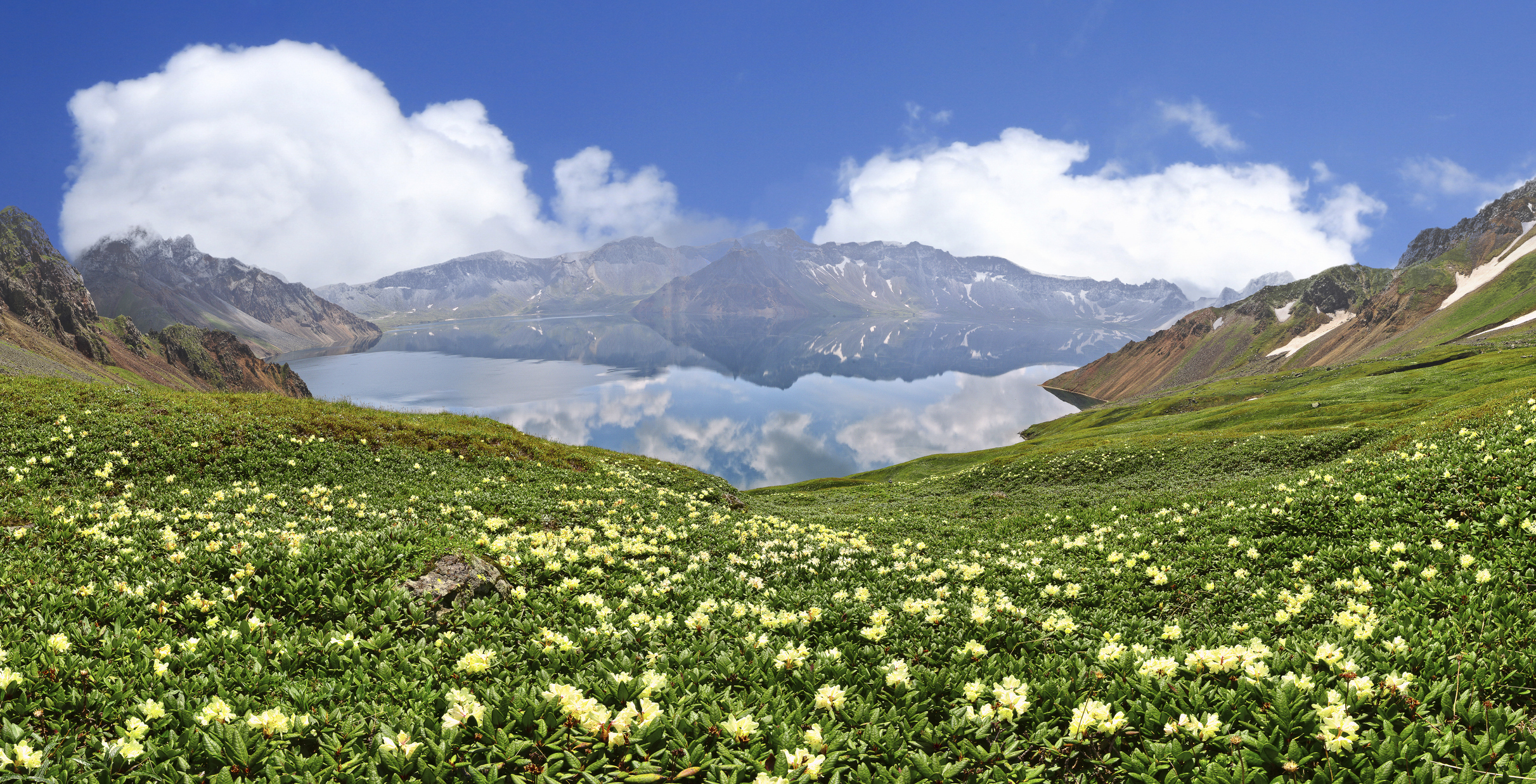
At the junction of China and North Korea lies a boundary-straddling volcano with two names. In China it is Changbaishan, a holy site that has been revered for centuries. In North Korea it is Mount Paektu (or Paektusan), steeped in legend and symbolism that is deeply tied to the Kim dynasty. Situated in its caldera is Heaven Lake, which earned its status as a UNESCO Biosphere Reserve in 1989. In 2024, the North Korean side of Mount Paektu was recognized as a UNESCO Global Geopark, one of over 330 in 50 nations. These designations have been a source of significant pride for North Korea and have served as an innovative way for North Korea to be included in the international community, even in tense times.
The Opportunity
Experts Hall Healy, former Chairman of the Board of the International Crane Foundation, and Dr. Saleem Ali, Blue and Gold Distinguished Professor of Energy and the Environment at the University of Delaware, recognize the potential for engagement with North Korea in this arena. Based on significant experience working in-country with North Korea on environmental issues, Healy and Ali’s idea builds upon Ali’s 2022 Forbes article “‘Natural’ Opportunities for Dialogue with North Korea” that urged the United States to consider “environmental and science diplomacy channels to thaw relations with the DPRK”.
Healy and Ali’s proposal includes the expansion of the tri-border locations of Russia, China and North Korea’s already declared UNESCO sites and the designation of a UNESCO Transboundary Nature Reserve or a World Heritage Site at the tri-border area. The tri-border area is composed of wetlands and numerous other natural features, one of the most exciting being that it is at the end of the range of the critically endangered Siberian tiger (of which only an estimated 500 remain in the wild).
There are numerous existing models for these proposed actions, including on the continents of Africa, Europe, and Asia and even in the region of this specific opportunity. Below are a number of already declared UNESCO World Heritage Sites near the tri-border area:
- In China: Capital Cities and Ancient Tombs of the Ancient Koguryo Kingdom, the Imperial Tombs of the Ming and Qing Dynasties, and the Migratory Bird Sanctuaries on the Coast of the Yellow Sea-Bohai Gulf;
- In North Korea: the Complex of Koguryo Tombs and Mount Kumgang-Diamond Mountain, an area known for its international tourism;
- In Russia: the Volcanos of Kamchatka on the Kamchatka Peninsula.
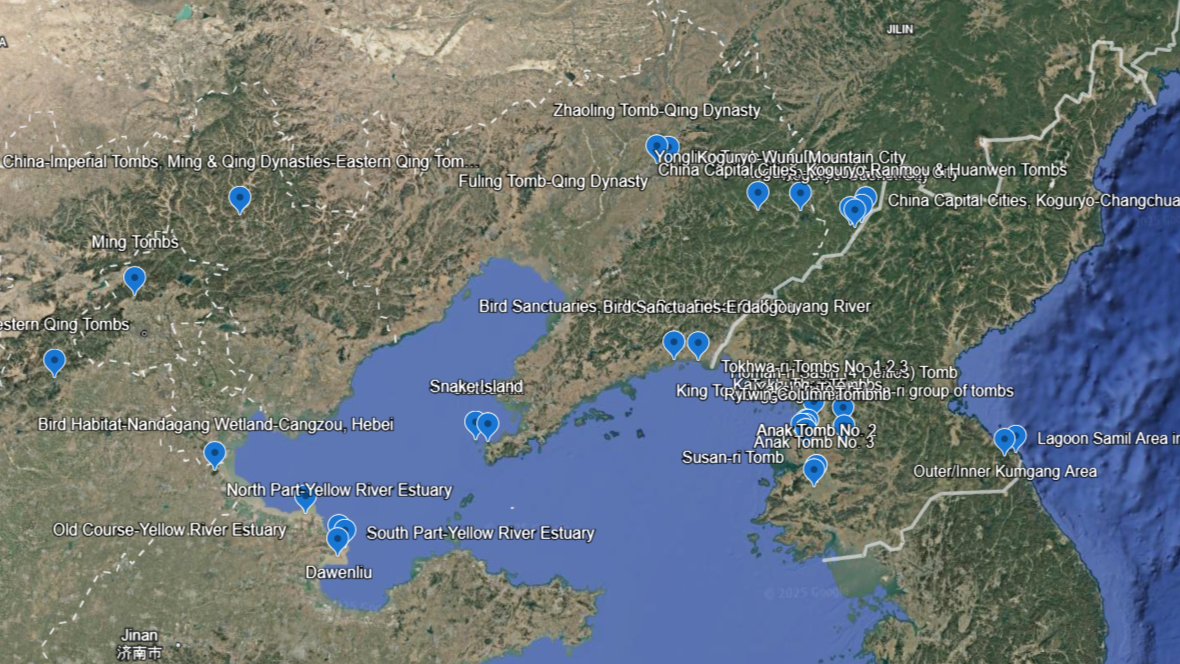
Image: Examples of the many existing UNESCO World Heritage Sites in the region.
Adherence to international precedent further supports Hall and Ali’s proposal. All three countries have ratified (1) the Ramsar Convention, (2) the Convention on Biological Diversity, and (3) the United Nations Framework Convention on Climate Change (also known as the Kyoto Protocol). Additionally, North Korea would like to have a wetland site near the tri-border area designated as a Ramsar wetland. Thus, timing for the suggested steps appears to be optimal.
The Rationale
This proposal has the potential to generate several desirable outcomes: significantly enhancing the long-term protection of this highly valued natural and cultural area bordered by these countries, facilitating of strong support for long-term economic benefits to all three countries via sustainable eco-tourism, securing opportunities for the involved countries to collaborate on additional conservation sites for their mutual benefit, and lastly – but perhaps most importantly – providing a “natural opportunity for dialogue”, in the words of former Australian Prime Minister Kevin Rudd. A number of potential stakeholders and aiding parties who would benefit from these outcomes have already been identified by Healy and Ali.
The international community can and should act on a rare opportunity for diplomacy that has potential to reduce tensions on the Korean peninsula and elevate the conversation surrounding the DPRK's longstanding engagement on environmental issues. Regardless of any geopolitical outcomes, the expansion of natural and cultural preserved areas outlined in this proposal honors Northeast Asia's shared cultural past and paves the way for a shared future rooted in the region's abundant natural beauty.
About the Authors
Hall Healy is Advisory Board Chair of Audubon National Society’s Midwest Region, and an Emeritus Director and past Chairman of the Board of the International Crane Foundation, a non-governmental organization dedicated to preserving the fifteen species of cranes and their habitats, and enhancing the lives of people residing near them, on five continents. He is a professional environmental facilitator and consultant, conducting training, facilitation and planning projects in the US, Russia, China and Korea. He has helped establish conservation partnerships in the US, in Russia at Lake Baikal and on Mexico’s Yucatan Peninsula. During his marketing, management and planning career in the steel, packaging and environmental engineering businesses, and as an independent consultant, Mr. Healy has facilitated numerous strategic planning activities for Fortune 500 and other companies, watershed protection groups, and non-profit organizations.
Mr. Healy has worked with officials of the Pisan Farm Cooperative in Anbyon Plain, near the port of Wonsan in southeastern DPRK, to implement one of the International Crane Foundation’s projects to help protect the endangered Red-crowned Crane (Grus japonensis). The Anbyon project’s purpose was to increase food production by training leaders and farmers in organic farming techniques, to encourage wild cranes to return to the area, and to protect and enhance local biodiversity. Mr. Healy has met numerous times with North Korean officials and scientists regarding the Anbyon project and about the prospects of maintaining the DMZ as a protected area, and has written several articles on DMZ conservation and its ecosystem services potential.
Mr. Healy earned a BA degree in Political Science from Colgate University and an MBA from the University of Chicago, Executive Program. Among his publications on planning and conservation issues, he has written “Environmental Management” for American Management Association’s Manufacturers Handbook and co-authored Packaging and Solid Waste. He is the former president of the DMZ Forum, an NGO dedicated to preserving species and habitats in Korea’s DMZ; a past director of the Board of Trustees of the Illinois Chapter of The Nature Conservancy; and is on the Governing Board of the Chicago Zoological Society. He also is a member of the International Union for Conservation of Nature (IUCN) Task Force on Transboundary Protected Areas, and of the IUCN Specialist Group on Storks, Ibises and Spoonbills.
Saleem H. Ali was born in New Bedford, Massachusetts (USA) but grew up in Lahore, Pakistan until his college years, receiving his Bachelor's degree in Chemistry from Tufts University, and his Masters and Ph.D. degrees in environmental policy and planning at Yale and MIT, respectively. He is Chair of the Department of Geography and Spatial Sciences and the Blue & Gold Distinguished Professor of Energy and the Environment at the University of Delaware (USA). He is also a member of the United Nations International Resource Panel. Before embarking on an academic career, Prof. Ali worked as an environmental health and safety professional at General Electric Corporation. His laurels include being a National Geographic Explorer, with field experience in more than 160 countries and all continents; being selected as a “Young Global Leader” by the World Economic Forum and serving on the boards of notable non-profit charitable organizations including RESOLVE, Adventure Scientists and Mediators Beyond Borders International. His books include Soil to Foil: Aluminum and the Quest for Industrial Sustainability (Columbia University Press) Earthly Order: How Natural Laws Define Human Life (Oxford Univ. Press) and Treasures of the Earth: Need, Greed and a Sustainable Future (Yale Univ. Press). Dr. Ali is a citizen of the United States of America by birth; Pakistan by parental lineage; and Australian by naturalization.